Undergraduate Courses


Entry to our undergraduate degree programmes is through the CK404 and CK412 CAO entry streams


Find Out More
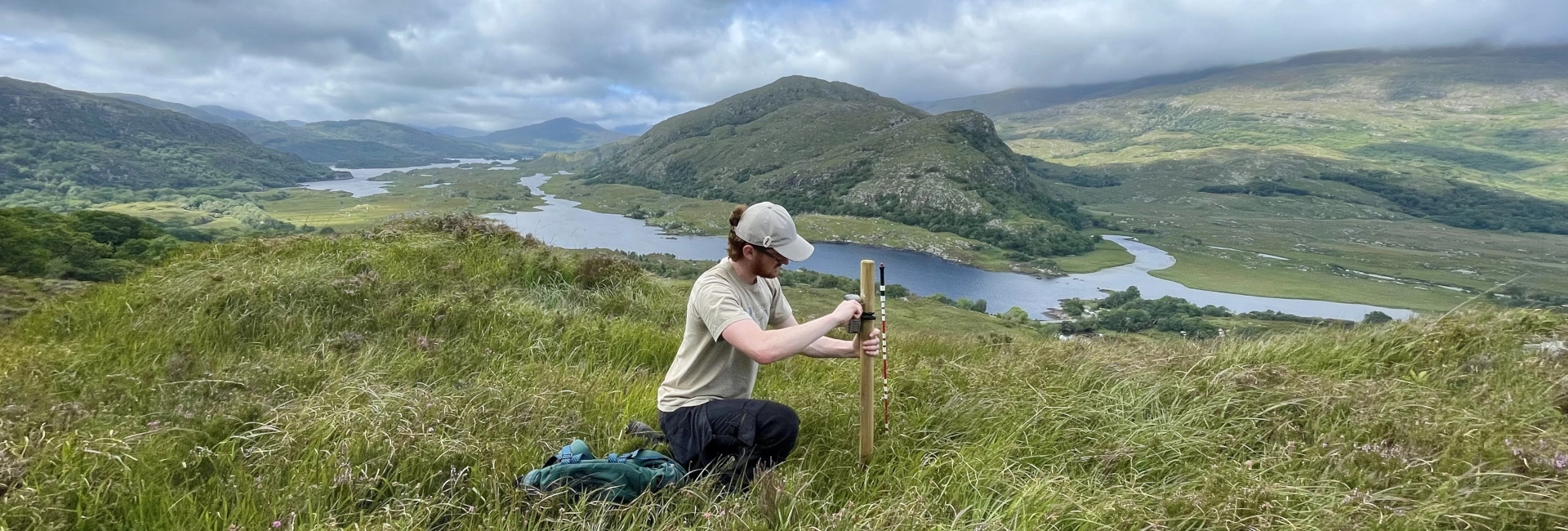
Research work being carried out on the top of a hill with lake and mountains in the background

Research


We advance and apply our understanding of the natural world through excellence in research


Find Out More

Masters Courses


Taught and research masters degree courses are available in a number of areas


Find Out More
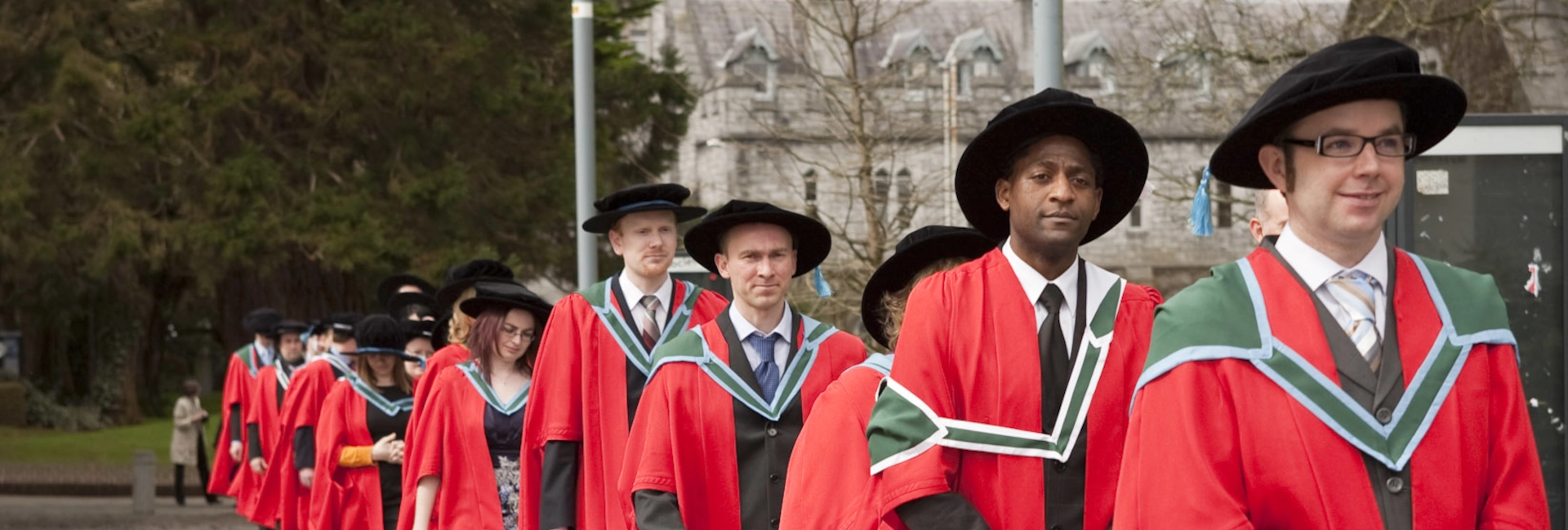
PhD Opportunities


The School of BEES has a strong research tradition and is an excellent place to pursue a PhD in biological, earth and environmental sciences


Find Out More

School of Biological, Earth and Environmental Sciences (BEES)

Committed to advance and apply our understanding of the natural world through excellence in research, teaching and innovation.

News from the School of BEES

The image shows the habitat suitability map created using Google Earth Engine to guide the reintroduction of giraffes in Angola. Making such models was part of what was presented in the course ‘Species Distribution Modeling with Google Earth Engine’. (Image: Dr Ramiro Crego).
15 Sep 2026

Free workshop on species distribution models using Google Earth Engine led by School of BEES researcher reaches over 1600 people from across 125 countries

1615 participants from over 800 organisations and from across 125 countries participated in July on a free course in Species Distribution Models using Google Earth Engine led by Dr Crego from the School of BEES and colleagues from the Smithsonian Conservation Biology Institute (Dr Stabach and Dr Connette). The course was part of NASA’s Applied Remote Sensing Training Program (ARSET) series.
Read more
Lough Hyne Touch Tank Event 2026 (Image: Lough Hyne Research Group, UCC)
17 Aug 2026

Lough Hyne Touch Tank Event

The Lough Hyne Touch Tank event took place on Saturday 15th of August.
Read more
In April 2026, a dead Greenland shark washed up on the Irish shore – the first ever to strand here (Credit: Ana Sanz/ Irish Whale and Dolphin Group)
17 Aug 2026

Research Focus: A stranding in Ireland sheds new light on the long, slow, ice-cold life of a deep-sea shark

Some Greenland sharks alive today may have been contemporaries of Shakespeare. With a scarred heart that beats for centuries and eyesight that doesn't fade, this deep-sea shark defies age-related decline. Jasmine Stavenow Jerremalm, a PhD researcher in marine ecology at University College Cork features in this BBC Future article.
Read on bbc.co.uk
06 Aug 2026

New Study Identifies Harbour Porpoise Bycatch Hotspots in Irish Waters and Calls for Urgent Action

New research led by scientists at University College Cork has identified persistent hotspots where harbour porpoises and gillnet fisheries are most likely to interact in Irish waters, raising concerns about the potential impact of fisheries bycatch on one of Ireland's most widespread marine mammals. Harbour porpoise, or muc mhara as Gaeilge, are the smallest cetacean species found in our waters.
Read more

Undergraduate Courses in BEES

With an internationally recognised culture of equality, inclusion and diversity, the School of BEES welcomes applications from all students through traditional (CAO) and non-traditional (DARE, HEAR, Mature Student, International Student) entry routes.

School of Biological, Earth and Environmental Sciences

An Scoil Eolaíochtaí Bitheolaíocha, Domhain agus Comhshaoil

Contact us

Distillery Fields, North Mall, University College Cork, Ireland , T23 TK30

Connect with us

Top