
Visual Thinking Strategies UCC
Visual Thinking Strategies is a research-based structured teaching methodology, involving close looking, reflection and discussion of visual art, to promote observation, communication, and critical thinking skills.
History of VTS
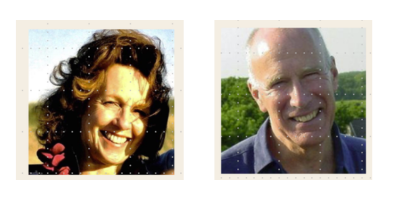
VTS was developed for art museums and schools by Abigail Housen, a cognitive psychologist and Philip Yenawine, a museum educator. Informed by Housen’s research into Aesthetic Development, it began with the goal of improving visual literacy or the ability to derive meaning from images. In the past 25 years it has been adapted to many learning environments including undergraduate teaching for medical and health professional students.
VTS in Health Professionals’ Training
The VTS teaching method was first used in medical student training in 2004, at Harvard Medical School. Since then, it has been incorporated into healthcare professional training programmes worldwide and a large body of research has emerged demonstrating positive outcome across a variety of learning domains.
Beyond improving observation, thinking skills and communication, engagement in the VTS process promotes students’ awareness of their own thinking patterns, biases and assumptions; fosters openness to differing perspectives and interpretations; supports empathic capacities; and helps students navigate ambiguity and uncertainty.
These are key capacities for clinical decision-making and good patient care. The authors of a systematic review of VTS in medical education (Cerquiera et al, 2023)1, concluded that it provided support for greater inclusion of VTS training in the medical curriculum.
VTS in UCC
In a pioneering initiative in 2012, UCC became the first university in Europe to introduce VTS across the medical and health sciences curriculum. This innovative programme was spear-headed by Siobhán Murphy who became Programme Director for VTS. Facilitators from across healthcare disciplines received expert training on-site training, many going on to become coaches themselves. Further facilitators continue to train within UCC and in specialised online programmes, adding to the VTS faculty.
Every year 500 students within the College of Medicine and Health receive 5 sessions of VTS. These are facilitated by an interprofessional faculty, usually in small class groups. The benefits of VTS are experienced not just by the students but also by facilitators within their other academic and clinical work.
 Some of the VTS Facilitators in the College of Medicine and Health, UCC.
Photograph by Christian Waeber, April 2026.
What happens during VTS?
The facilitator begins by inviting students to look at work of art together, in silence, for a minute.
This is followed by an open-ended question “What is going on this image/picture/artwork?”
Within a framework of curious and rigorous enquiry, a further two questions are posed “What do you see that makes you say that?” and “What more can we find?”
This encourages a range of responses during which participants are listening as others speak, providing evidence for theories and interpretations, moving beyond initial assumptions, looking more deeply, holding multiple perspectives in mind, and developing comfort with uncertainty. The facilitator maintains a neutral stance, listens to each student contribution, paraphrasing responses, linking ideas, acknowledging new possibilities, and prompting further enquiry. Reflective practice includes consideration of how this approach might have parallels with future clinical practice and patient care.
For further information, reading and online resources regarding VTS, please take time to explore the links within this VTS section. We hope you find it interesting.
Resources

Monthly online VTS Image Discussions - one hour - organised by the Visual Thinking Strategies Institute. Open to all. A sliding scale fee per session.
What’s Going on in this Picture? New York Times
This programme is run by the NYT Learning network as a resource for teachers.
Every week from September to May, a photograph is posted to prompt VTS based discussions. For further details, video examples and access to their archive of photographs see What’s Going on in this Picture? Video link below explaining the process.
https://youtu.be/4j-JgXgaCX4?si=sJD2F9SkksIODjEk
Visual Literacy & Slow Looking Activities
Slow looking refers to various practises designed to promote greater engagement with and attention to works of art with the intention of sparking curiosity, reflection and the capacity to create personal meaning.
For a review of Slow Looking see Beene and Statton Thompson (2022). Many museums offer opportunities for slow looking. Sometimes the programmes come under different names such as the excellent Mindfulness and Art series at the National Gallery of Ireland available, in-person or online.
10-Minute Challenge: New York Times 10-Minute Challenge
The NYT also offer a monthly observational challenge — an invitation to spend 10 minutes, uninterrupted, looking at a work of art. It may add some questions to consider during the period of attention and it is followed by a discussion.
Journal of Investigative Dermatology
A Visual Literacy feature published quarterly, taking the form of a conversation about a work of art. The most recent article was published March 2026. Some previous ones are linked below.
A Bar at the Folies-Bergères by E. Manet
The Family of Jan Brueghel the Elder by J. Breughal
Additional Resources
Strategies/181465-2.htmlhttp://www.lynda.com/Education-K-12-Education-tutorials/Visual-Thinking-Strategies/181465-2.html